Developing Female Characters Reading Victoria E. Bynum
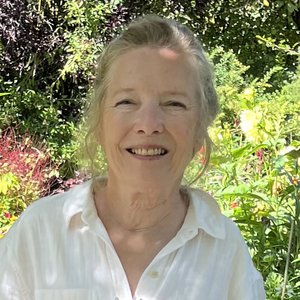
Victoria E. Bynum, historian and author, specializes in the Civil War period. You may be familiar with her book, The Free State of Jones, which inspired the 2016 movie of the same name.
While researching for my next book, based in the Piedmont Region of North Carolina, where the population was primarily poor white southerners and free Black farmers. Many southern abolitionists were forced to join the Confederacy.
However, the basis of my research is the widowed and single women who discovered they had no rights to land, their bodies, or even the care of their children. Thus began my reading of Bynum’s nonfiction book entitled Unruly Women: The Politics of Social and Sexual Control in the Old South, published by The University of North Carolina Press in 1992.
Women who found themselves pregnant rarely could prove rape because “it was their fault” or men “assumed” they were “available.” Bynum explains that the 19th-century mindset created stereotypes that made it difficult for women and mothers to survive.
My maternal great-great-great-grandmother and her daughter were, as Bynum points out, non-elite white women in the Piedmont who were vulnerable, especially when community gossip and speculation ruined their chance for survival, and were often labeled for ‘sexual misconduct.’ Even if it was rape.
While reading Unruly Women, I focused on the historical fiction characters based on the lives of my ancestral grandmothers. My great-great-grandmother was orphaned at five years old in 1863. Even if her mother had survived her widowhood, she would not have been able to legally raise her children alone. The courts would have given them to another family member. The emotional hardship of losing her children would have driven her to desperate measures. But as Bynum pointed out, even though “the courts required the mother to apply for legal guardianship,” she would not have had economic security to care for them, and the children were considered “orphaned.”
My great-great-grandmother was placed with other family members, along with her two brothers. My investigation has taught me she would have had little control over her life, and eventually gave birth to two illegitimate children, a son and a daughter, fathered by two different men. Statistically, I would conclude that those relationships were not by choice, although there was gossip about her morals and scruples. Illegitimate pregnancies would have alienated her from family members. Either way, she would have been shunned by her family and small community and would later seek obscurity in a big city.
As Bynum states, “few understood women were forced or tempted by circumstances to defy the norms of social behavior.” Their economic survival depended on working domestically, on farms, or turning to prostitution and other illegal activities. In my great-great-grandmother’s case, she had to give up her children, who never knew each other.
By state law, North Carolina required unwed mothers to name the fathers so they could assume financial responsibility for the state's care of the children, a practice known as Bastardy Bonds. If she chose not to name the father(s), then the mother(s) had to pay for the bonds herself. Because of social implications and laws that discriminated against unwed mothers, the only choice she had was to give up her children.
Given my understanding of Bynum’s research, it was not a “choice” for my great-great-grandmother but a necessity over which, as an unwed mother, she had no control.
Have you learned about family history that has given you a new perspective on the women in your family? Please feel free to leave a comment below.